
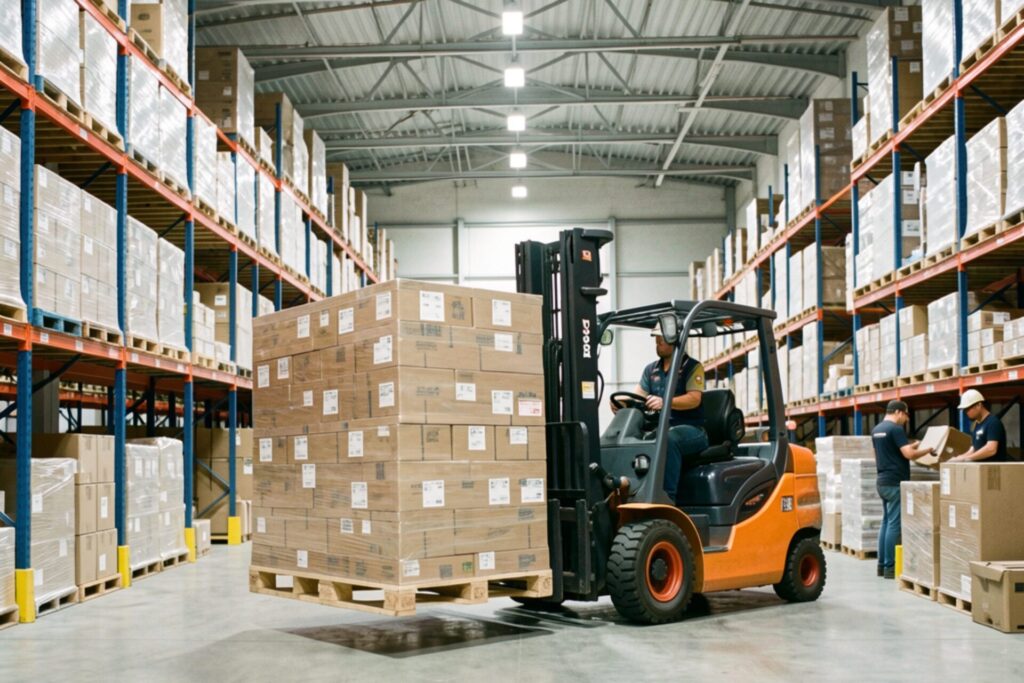
Proper securing of pallets during transport is key to protecting goods, ensuring safe handling, and minimizing financial losses. Inadequately secured cargo can cause damage to products during transport, delays in logistics, or even dangerous situations when handling in the warehouse.
In this article, we will look at how to properly secure a pallet during transport, what technologies and materials to use, and what are the most common mistakes when packing pallet goods.
Why securing pallets correctly is important
During transport, pallets undergo several stages of handling, from loading at the warehouse through transport to unloading at the customer’s premises. During this process, the following may occur:
- vibrations during transport
- impacts during handling with a forklift
- shifting of the load when braking or turning
If the pallet is not properly secured, damage to the products, packaging, or the entire shipment may occur. Companies often face complaints, additional costs, or loss of customer trust.
Basic rules for pallet packaging
When packing pallet goods, it is important to follow a few basic rules.
Stable storage of goods
Goods should be stored evenly and stably. Heavier products should always be placed at the bottom of the pallet and lighter ones at the top. Incorrect weight distribution can cause the pallet to tip over during transport.
Do not exceed the edges of the pallet
Products should not extend beyond the edges of the pallet. Such cargo is more susceptible to damage during handling and may cause instability of the entire shipment.
Use of a suitable pallet
The type of pallet itself is also important. The most commonly used are:
- wooden pallets
- plastic pallets
- Euro pallets
The pallet must always be undamaged and strong enough to bear the weight of the load.
Using strapping to secure pallets
One of the most reliable ways to secure palletized cargo is strapping.
Strapping ensures that goods are securely attached to the pallet and prevents them from shifting during transport. The most commonly used types in logistics and industry are:
- PP strapping (polypropylene) – suitable for lighter goods
- PET strapping (polyester) – suitable for heavier and more stable loads
Strapping can be done manually or using automatic strapping machines, which significantly speed up the packaging process and ensure even tensioning of the strap.
The advantages of automatic strapping systems are:
- higher packaging efficiency
- consistent strapping quality
- lower labor costs
- safer handling of goods
Stretch film as cargo protection
Another very important element in securing pallets is stretch film.
Stretch film is used for:
- cargo stabilization
- protection against dust and moisture
- reinforcement of the entire pallet
When used correctly, the film wraps around the entire pallet, including the bottom, firmly securing the load to the pallet.
Larger warehouses and manufacturing facilities often use automatic wrapping machines that can wrap pallets quickly and evenly. Automated wrapping also reduces the consumption of packaging materials.
Protective elements for pallet packaging
In addition to strapping and stretch film, other protective elements are often used.:
Corner protectors
Cardboard or plastic corners protect the edges of goods from damage and also increase the stability of the strapping.
Anti-slip pads
They are used between individual layers of goods and prevent products from shifting.
Protective covers
For sensitive goods, it is advisable to use protective covers or moisture-proof film.
The most common mistakes in securing pallets
When packing palletized goods, companies often make mistakes that can lead to damage to the shipment.
The most common mistakes are:
- insufficient strapping
- strapping that is too loose
- uneven placement of goods
- insufficient stretch film wrapping
- use of damaged pallets
These mistakes can significantly increase the risk of damage to goods duringprepravy.
Packaging automation as a modern solution
Automated packaging is increasingly being used in modern logistics and manufacturing operations.
Automatic strapping and packaging machines offer companies a number of advantages:
- faster pallet packaging
- lower labor costs
- consistent packaging quality
- greater safety during handling
Investments in automation often pay for themselves within a few months thanks to savings in time and materials.
Proper securing of pallets during transport is an essential step for safe and efficient logistics. The combination of properly stored goods, high-quality packaging materials, and modern technologies such as strapping and packaging machines significantly reduces the risk of damage to shipments.
Companies that pay sufficient attention to the packaging process are able to not only protect their goods, but also optimize logistics processes and reduce overall transport costs.